Rigid Frame Erection in New Mexico
Interstate 25 over Raton Pass closes now and then in heavy winter snow, and a flatbed full of frames does not get a vote. Rigid frame erection in New Mexico is as much about getting steel and a crew to the footings on the day the concrete is ready as it is about the lift itself. The lift is the easy day. The planning is what saves the schedule.
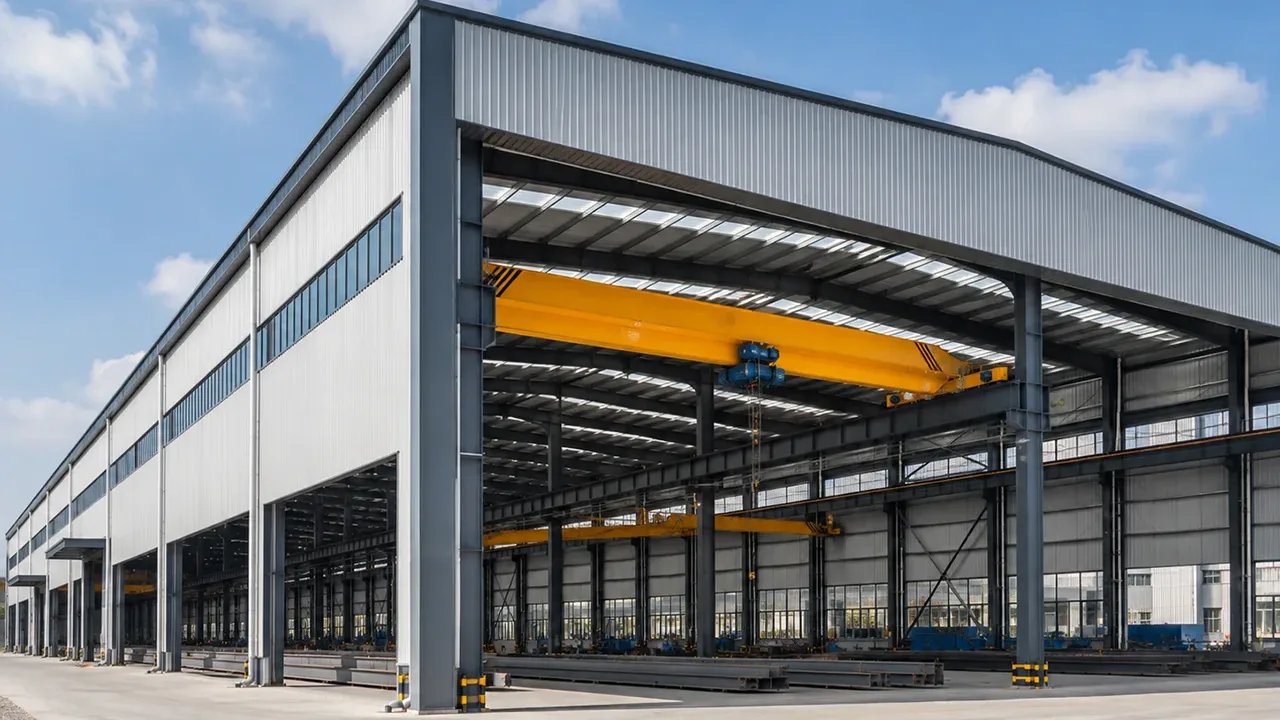
A rigid frame is the primary structure of most metal buildings: a column down each side and a rafter across the top, bolted at the knees and the ridge, with no interior columns in the way. We unload the pieces, lay them out against the erection drawings, assemble frames on the ground, stand them with a crane or telehandler and bolt them to the anchor bolts cast into the foundation. Bracing goes in as each frame goes up, because a frame standing alone is not stable. Purlins and girts follow, then roof and wall panels.
We erect standard pre-engineered packages, hybrid steel buildings and the heavier clear span frames that need a bigger lift and more careful sequencing.
Site conditions that decide how we lift
Getting there is part of the job. Los Alamos is reached by NM 4 and NM 502 only, so a long load of rafters needs a planned route and a delivery window. The road into Los Alamos is a short list of options, and any one closure matters. Up in Taos, NM 68 follows the Rio Grande as a two-lane road with very few passing opportunities between Velarde and Taos, so a slow oversize truck holds up everyone behind it and the driver needs a plan for pull-offs.
On the site itself we look for the laydown area, overhead power lines, soft ground that will not carry a crane and a slab that is not yet at strength. Frames are long, and a rafter that does not fit around a corner on the plan will not fit around it on the day. High desert wind picks up in the afternoon in much of the state, so we plan lifts for the morning and stop if the wind stops being predictable.
Bracing, lifting and working at height
Most serious steel erection problems come from partial structures. A frame is only stable once it is tied into the next one, so we install temporary bracing and cables as each frame goes up and we do not remove them until the permanent bracing and purlins are in. Crane and telehandler lifts get a short meeting first: who signals, who is under the load, where the rigging goes and what the weather is doing. Fall protection goes up with the work, not afterward.
Summer monsoon afternoons bring lightning and sudden gusts, and we do not keep people on steel in a storm. If the forecast looks bad we shift to ground assembly, panel staging or trim work. It costs a few hours, and it is cheaper than the alternative. We keep records of daily briefings, inspections and equipment checks so you can see how the job was run.
Our trade partners on your frames
We do not hand your frames to a crew we have never worked with. The foreman who walks your footings the day before is the one who runs the lift. We bring or rent the equipment the building requires: a telehandler and a manlift for a small shop, a crane for a tall or wide frame. Crane availability thins out fast away from the Rio Grande corridor, so we book early and we tell you when a crane has to travel a long way, because that shows up in the price.
Tolerances matter. A frame that is a half inch out at the knee causes problems at the ridge, so we check anchor bolt locations and elevations before the steel arrives and compare them with the drawings. When a bolt is off, we say so before the first lift, not after. That is also why our structural steel erection work and our metal building work use the same crews and the same habits.
From the first truck to a dry building
The sequence is simple and the details are not. The slab has to reach strength and the anchor bolts have to be surveyed. Then steel is delivered, checked against the packing list and laid out in the order it will go up. Frames are assembled and stood bay by bay, braced, and tied with purlins and girts. Roof panels go on next so the inside stays dry, followed by wall panels, trim, doors and openings. Insulation can go in at any point where the weather allows.
A small building can be framed in a few days. A larger one takes longer, and remote jobs lose time to travel, weather and parts that did not come on the truck. We list shortages the day the steel is unloaded and call the manufacturer immediately, not at the end of the job. If an overhead door opening needs a specific header, overhead and hangar door details are best settled before the wall steel is ordered.
Working across a state this size
New Mexico is long, and travel time is a real cost. A job in Raton, a job near Las Cruces and a job in Farmington require different travel and mobilization plans. We are honest about that. On far sites, crews lodge near the work, and we price the travel and the lodging, not hide it in a rate that looks too good to be true. Water for concrete and for dust control is another thing we confirm before bidding.
The buildings we erect are as varied as the state. Truck yards and cross-dock terminals need wide bays and big doors. Self-storage wants long, repeatable runs. Fleet and equipment operators, covered by our work for automotive and fleet owners, want tall doors and room to turn.
Planning a rigid frame building?
Send the erection drawings or a rough plan with the town and the building size. We will tell you what the lift needs, how long it takes and what the trip to your site adds to the cost.
Common Questions
What has to be done before the steel arrives?
The slab and piers have to be poured and cured to strength, and the anchor bolts have to be surveyed against the drawings. We also need a clear laydown area near the building and access for the delivery truck and crane. If any of that is missing the day of delivery, the crew sits and the clock runs.
How long does erection take?
A small shop can be framed in a few days. A wide, tall or long building takes weeks. The number depends on frame count, crane access, weather and whether the crew is traveling from far away. We give a duration once we have the erection drawings, not off a rough sketch.
Can you erect in wind, rain or snow?
We erect in rain and cold when it is safe. We stop for lightning and for wind that makes the lifts hard to control. In the high desert the wind often settles in the evening, so some lifts are best planned for early in the day.
What if the anchor bolts are in the wrong place?
We find that before the steel is unloaded, and we tell you right away. Small misses can be fixed with slotted plates or shimming where the engineer approves it. Larger ones need a design fix. Either way, it is far cheaper to learn about it before the first frame is on the ground.
Who supplies the crane?
We do, rented or owned depending on the job. For remote buildings we confirm crane size and travel time before we bid, because moving a crane a long distance can be a real line in the budget.