Structural Steel Erection for New Mexico Projects
Over 3,000 construction jobs went into Intel's Fab 9 in Rio Rancho, and that is one reason a crew boss in this state knows that skilled steel hands are not always free when you need them. Big projects draw ironworkers, riggers and crane operators into the same few corridors. If you want a building erected on time, you have to book the crew before the steel leaves the plant, not after it lands at the site.
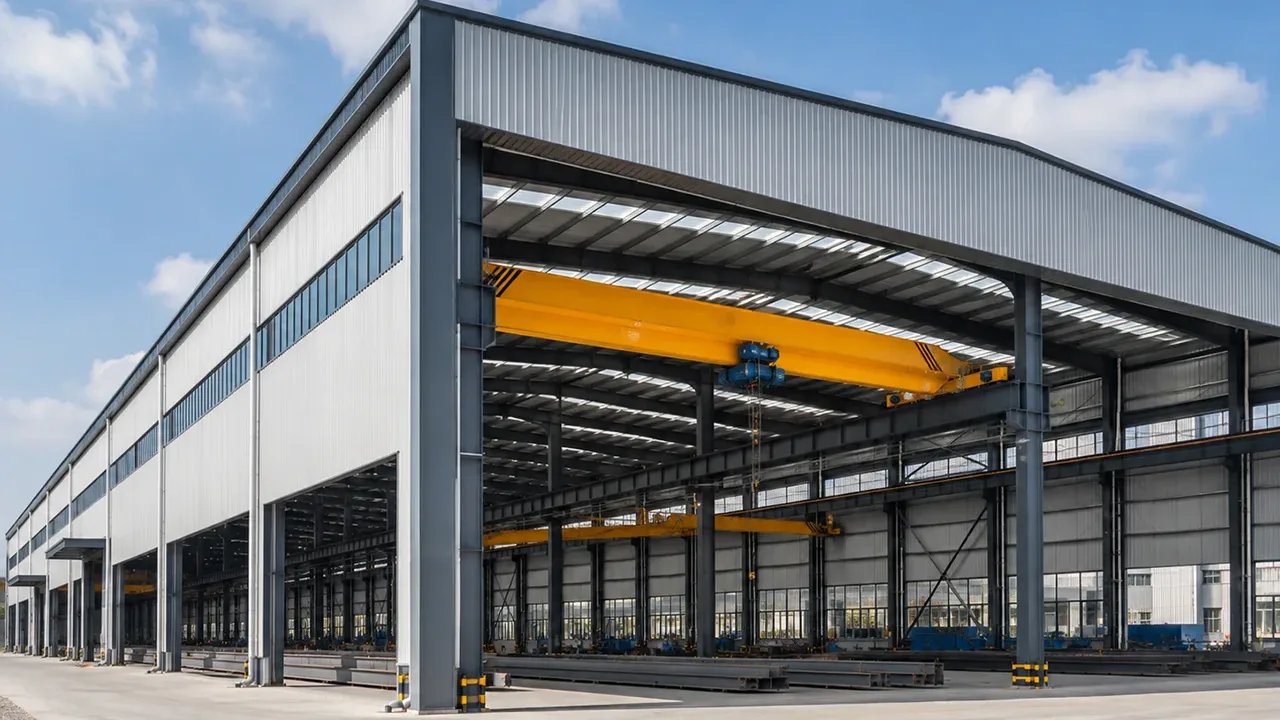
We erect structural steel for metal buildings and for the mixed steel that often goes with them: primary frames, secondary purlins and girts, bracing, mezzanine framing, crane runway supports, platforms, stairs and rails. The work includes receiving and checking the steel against the shipping list, setting the columns on the anchor rods, raising the frames, plumbing and bolting, installing bracing and then closing the structure so the roof and wall crews can follow.
The erection plan is a safety plan and a schedule at the same time. Where a lift happens, how the steel is staged, what the ground can hold under a crane and how long a truck can wait are all decided before we arrive. Our work is closely tied to rigid frame erection for standard buildings and to anchor bolt and foundation work for the base.
Big projects set the labor market
The state's large projects shape who is available. Meta's data center campus in Los Lunas employed more than 1,000 construction workers at peak, and by July 2025 the campus had seven operating buildings with three more under development. At Eunice, Urenco held a groundbreaking on 18 August 2026 and said its investment will increase to substantially more than $8 billion, with a project expected to support 300 to 600 jobs at peak construction. Los Alamos National Laboratory reports 8.4 million square feet of buildings on almost 40 square miles of DOE-owned property.
Those projects are good for the state and tough on small manufacturers, shop owners and farmers looking for an erection crew on a normal schedule. When a major job peaks, lifts, rigging crews and skilled hands become scarce and their rates rise. We talk about it openly and give owners realistic dates. Owners near Los Lunas or Eunice should expect competition for labor, lodging and cranes during peak periods.
Trade partners we coordinate
We coordinate erection trade partners for metal buildings and light structural steel. They set steel, raise frames, bolt and plumb, install bracing and place purlins, girts and decking. Specialty welding and heavy crane lifts may be subcontracted, and we make that clear in the proposal. Using the same crews for foundation, steel and cladding reduces gaps between trades and keeps the quality consistent.
Licensing matters here. Under 14.6.6 NMAC, the GB-98 General Building classification requires four years of foreman-level experience, at least two of them commercial, and covers erecting, altering and repairing commercial buildings and certain structures. Ask any steel erector which classification they work under, and who the qualified person is on your project. Our commercial metal buildings work shows how erection fits into a full building contract.
Fall protection, crane setups and wind
Steel erection is one of the more dangerous trades, and the plan has to treat it that way. Federal steel erection rules cover things like column stability, fall protection for connectors, decking and landing loads, and our trade partners follow them. We hold a pre-lift meeting, mark the swing area, check the crane's setup and the bearing under its mats, and inspect rigging every day.
Wind is the biggest day-to-day factor in this state. Spring gusts can stop a lift for the day, and a partially braced frame is a hazard in a storm. We install temporary bracing as we go, keep the open end of a building tied off at the end of the shift, and stop lifting when wind or lightning calls for it. On a high, exposed site, we plan to erect in the calm morning hours and finish bolting in the afternoon.
Access, ground and the long drive
Cranes need firm ground, and much of the state is soft after rain. We look at the road in, the turning radius for the trucks, the crane pad and overhead lines before we bid. On remote sites, a crane may travel for hours. Heavy mobile cranes are scarce outside the larger cities, so we book them early and confirm the size for the lifts, not for the average.
We are honest about travel. A crew working far from town needs lodging, fuel, meals and often a water truck for the site. The first and last days of each trip are partial days. Where we can, we schedule the steel to arrive in a sequence that matches the erection order, so a crane does not sit while a truck is stuck. Our warehouse metal shells work is a good example of repeated frames erected in a tight order.
What drives the cost of steel erection
The cost drivers are tonnage, piece count, building height, crane size and duration, and site access. A tall or heavy frame needs a larger crane. A long, narrow site may let the crane sit in one place, while a wide building may need several setups. Welded connections cost more than bolted ones. Complex trusses, crane runways and heavy mezzanines raise the work content.
Remote location adds cost: travel, lodging, mobilization and the risk of weather delays. Quotes should show crane and crew costs separately from the steel. Ask for a unit price per frame or per tonnage if you want to compare bids. If a bid is far below the others, ask what it leaves out. The cheapest bid often leaves out bracing, temporary works or crane time, and you find that out when the crane is already standing on your site.
Book the crew before the steel ships
Send us the shipping list, erection drawings and site address. We will check access and crane needs, then give you a schedule and a price with travel shown.
Common Questions
Can you erect steel supplied by another manufacturer?
Yes, if the drawings and shipping list are complete. We check the delivered steel against the list, report shortages and damage, and erect from the manufacturer's drawings. Tell us who supplies the steel early so we can request the erection drawings and bolt list.
What crane size will my building need?
It depends on the heaviest lift, the radius and the site. A small shop may use a modest rough-terrain crane, while a tall or wide building needs more capacity. We choose the crane after we see the frame weights and the site layout, and we check ground bearing before it arrives.
How long does erection take?
It depends on the size and complexity. A simple building can go up in days, while a large or detailed structure takes weeks. The bigger variables are steel delivery order, weather and crane availability. We give a schedule with those pieces stated.
Who is responsible for steel damage in shipping?
Check the delivery on arrival and note damage on the receipt. We inspect every load. Minor damage can often be repaired in the field, and larger damage goes back to the manufacturer. Early notes make the claim easier.
Do you need power and water on site?
Welding and tools need power, and a crew needs drinking water. On sites without service, we bring generators and water. We will include it in the quote so you can plan.