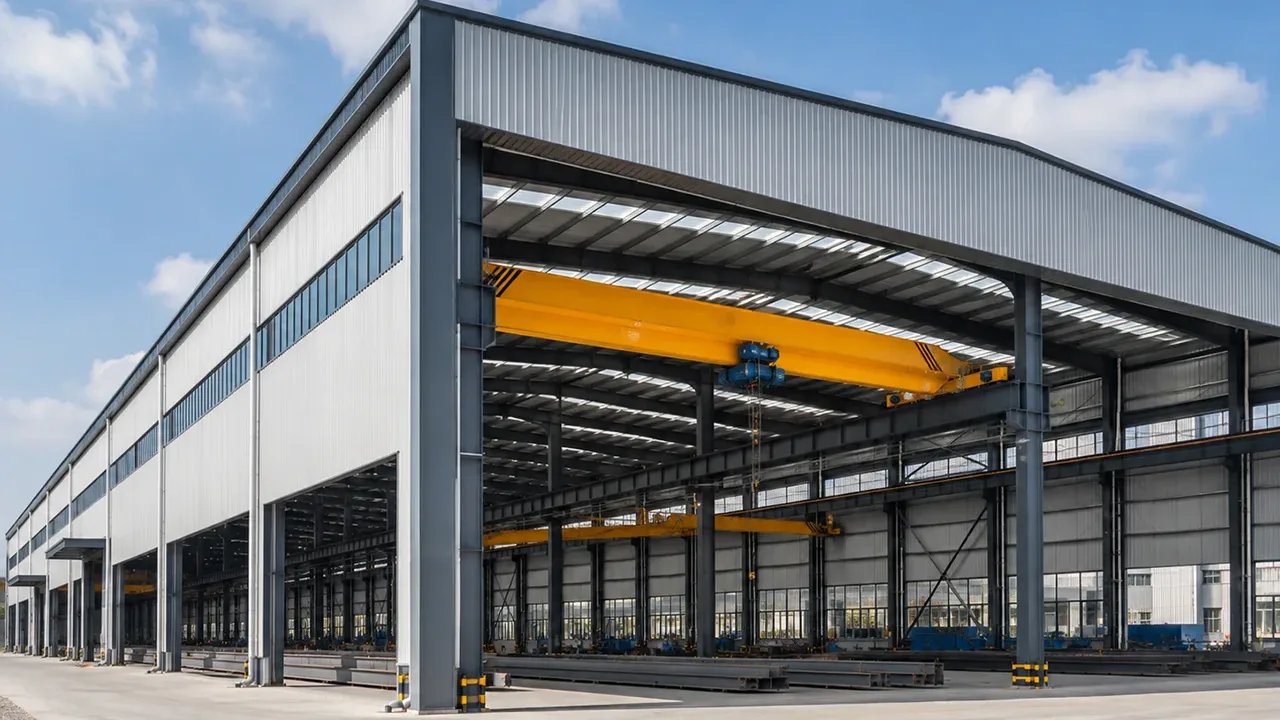
Overhead Hangar Doors for New Mexico Airfields
Open the door on a windy afternoon and a hangar becomes a sail. The opening is the largest and weakest part of the wall, and in New Mexico it faces spring gusts, afternoon dust and monsoon rain driven sideways. We install and frame overhead hangar doors so they open under load, close tight, and do not rack the building around them.
Most owners start with the aircraft and work out the door size from the wingspan and tail height. That is the right start. The next questions decide the price: bifold, hydraulic or sliding, how much header the frame needs to carry the door, and where the power and backup lift come from. A door chosen after the building is ordered often forces a header redesign. A door chosen first drops cleanly into the aircraft hangar package.
We coordinate the door with the frame, the slab and the electrical, because three trades touch the same twelve feet of building. Our trade partners work in places where the closest supply house is a long drive, so we also plan spare parts and a hand-crank fallback before the door is commissioned, not after the first failure.
Choosing the door for the wind, not the brochure
Bifold strap-lift doors fold up and out, rely on cables and a motor, and work well on wide openings where the building height allows the fold. Hydraulic doors swing the whole leaf up like an awning and store neatly, but they push a lot of wind load into a few hinge points. Horizontal sliding and stack doors run on a floor track and are slower, but they handle wide openings and suit buildings where headroom is tight. Each type loads the frame differently, and each fails differently when a gust catches a half-open leaf.
We pick based on opening size, local design wind, aircraft sequence and how often the door will move. A flying club that opens once a day has different needs from a maintenance operation that opens a dozen times. We keep to the door manufacturer's engineered installation and sign off the header, jamb columns and bracing with the building engineer before steel is fabricated. We do not shop for the cheapest leaf and then hope the frame survives it.
Where hangar doors are going in the ground right now
Airports across the state keep adding covered aircraft space. A 2022 report said the Santa Teresa airport would receive new hangars and a cargo-only runway, with private builders already putting up speculative warehouses of 365,000 and 135,000 square feet nearby. At Roswell Air Center, tenants include AerSale and other aircraft repair and refurbishing companies, plus a large aircraft storage site where over 300 aircraft were ferried in 2020. Repair hangars like that need wide, tall openings that can take big airframes in and out safely.
Wind decides which airports can use their own runways, and it decides door design too. The FAA approved a new runway at Belen's Alexander Municipal Airport after the airport manager said the existing runway cannot be used when the wind blows in from the west. That is a useful reminder for anyone choosing a door: the wind that shuts a runway will lean on your door. At Taos Regional Airport, which sits at 7,095 feet, we also plan for cold starts and snow loads at the header.
What changes the price of a hangar door
The first driver is clear width and height. Every extra foot of opening adds door weight, header depth, motor size and cable length, and the cost curve is steeper than most owners expect. The second is the type: bifold generally costs less per square foot than hydraulic, and sliding doors cost more in the slab and track than in the leaf. The third is insulation, windows and seals, which matter if you heat or cool the hangar or run it as a paint or avionics shop.
Site cost counts as much as door cost. Shipping a long door section to a remote strip, renting a lift to set it, and bringing a factory technician for commissioning are real line items. We flag them in the estimate. Power is the other surprise: a three-phase motor on a bare airfield may need a transformer and a trench before the door can run. Plan for a manual or battery backup so the aircraft can always get out in a hurry.
Pinch points, power and getting an aircraft out
Hangar doors hurt people when cables fray, limit switches fail or someone stands in the fold path. We install edge sensors, hold-to-run controls where the owner wants them and warning labels at every pinch point, and we walk the operator through the manual release before we leave. Lockout and tagging during service is part of that handover, along with a written inspection list for cables, rollers and seals.
Electrical work follows the 2020 New Mexico Electrical Code (14.10.4 NMAC), which adopts the 2020 National Electrical Code as amended and took effect March 28, 2023. We coordinate motor circuits, disconnects and controls with the electrician, and we make sure the hangar has a way to open the door without power. In a monsoon storm with the grid down, an aircraft owner should still be able to get in and shut the door.
What else connects to the door opening
The door opening is framed by the same steel that goes up in structural steel erection, and the track recesses and embeds are set during the slab pour described in our anchor bolt and foundation work. If you are planning a larger field with several bays, the aviation industry page explains how we sequence hangars for flight schools, charter operators and maintenance shops.
The hangar door also matters for ag aviation and utility operators. If you run crop-dusters or spray aircraft, our agriculture and agribusiness work covers chemical storage and wash pads beside the hangar. For a hangar built as part of a commercial campus, the aircraft hangar building type page lays out the typical envelopes.
Tell us the aircraft and the wind
Give us the wingspan, tail height and airport. We will recommend a door type, check what the header has to carry, and quote the install with realistic freight and power.
Common Questions
Which hangar door type handles New Mexico wind best?
No type wins on its own. Bifold doors are common and economical, hydraulic doors store cleanly, and sliding doors resist wind well when closed. What matters is that the door manufacturer and the building engineer agree on design wind and that the header, jambs and bracing are sized for it. We confirm that in writing before steel is released.
Can a door be added to a hangar that is already built?
Sometimes. If the original frame left enough header depth and jamb stiffness, a new door can be installed. If not, we may need to add a header beam or reinforce columns first. We look at the existing drawings or field-measure the opening, then tell you what is practical.
How long does installation take?
Door lead time depends on the manufacturer and the size, and the install itself is usually a matter of days once the opening is ready, with commissioning on top. Delays come from power not being on site and from the header being wrong. Get those two right and the door goes in quickly.
Do we need a hand crank or backup power?
Yes. We recommend a manual release or battery backup on every powered door so the aircraft can be moved in an outage or storm. In a remote location with a long drive from town, a stuck door can strand an airplane for a day.
What will the freight and remote delivery add?
Long door sections need a flatbed and sometimes a lift to unload, and a remote strip may add hours of travel for a factory technician. We price those pieces separately in the quote. It is better to see them early than to find out on the day the crew arrives.