New Mexico is large, and most of the steel buildings we erect sit a long way from the nearest paved lot, crane yard or ready-mix plant. PEMB Contractors of New Mexico builds pre-engineered metal buildings across the state, and that distance decides how we plan. We talk about the drive and the water supply before we talk about paint color. A frame that arrives on time is no use if the crew cannot reach the pad or the slab cannot be poured.
That is the honest starting point for every job we take. A dairy barn outside Portales, a hangar on a rural strip and a shop building on the high desert all use the same basic steel system. They do not use the same logistics. We price and schedule the logistics first, then the building.
What we build
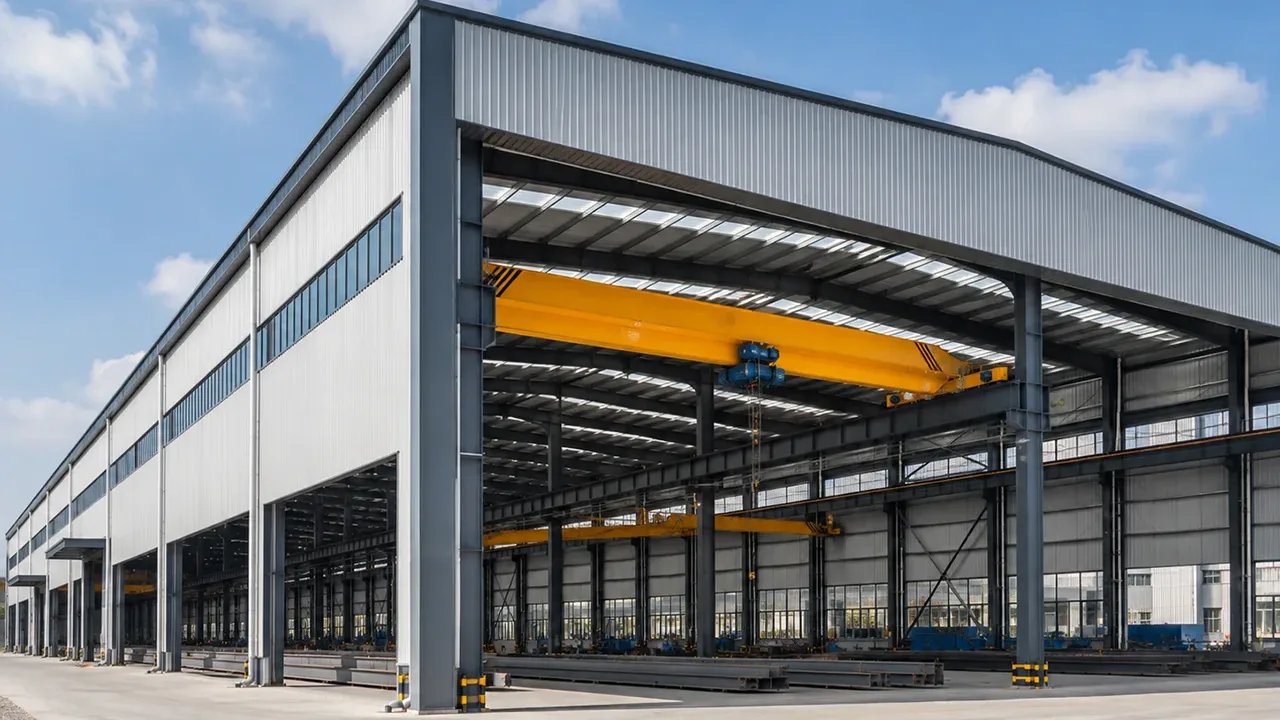
Our core work is pre-engineered metal buildings: a rigid frame designed by the manufacturer for the loads at your site, delivered as numbered parts and bolted together in the field. We handle the full scope, from foundation layout through the last trim piece. That includes clear-span structures with no interior columns, wall girts and purlins, framed openings, roll-up and sectional doors, walk doors, skylights and ventilation.
The frame is the part everybody sees, but rigid frame erection is mostly sequence and discipline. Columns go up plumb, rafters are set and braced as the building closes in, and every bolt is torqued and checked before the next bay goes up. Wind is the main hazard on a high-desert site, so we do not leave a half-braced frame standing overnight if we can avoid it. When a crew has to stop, the structure is left stable and the open end is tied back.
On the roof we install standing seam roofing where the owner wants a concealed-fastener system that moves with the temperature swing, and we install screw-down panels where budget and use call for them. Insulated panels, liner panels and trim are part of the same envelope package. We also take on additions to existing metal buildings, re-skin work on tired walls and roofs, and mezzanines inside a shell that has outgrown its floor plan.
Dairies, hangars and the buildings in between
Agriculture is the steadiest customer for steel in this state. Around Portales there are roughly 40 dairies, a dairy solids plant and a large organic peanut business, and eastern New Mexico is full of freestall barns, commodity sheds, equipment shops and hay storage. We build for dairy operators, farms and agribusiness who need clear span, good drainage, a floor that hoses out and a crew that finishes before the herd or the harvest cannot wait. Our dairy work pays attention to the things a brochure skips: where the manure goes, how the curtain walls open, how cattle traffic crosses the slab.
Aviation is the second pillar. Dry air is kind to steel and to aircraft, and the state has airfields from the Four Corners to the border. We build aircraft hangars as clear-span frames with a tall door end, a slab that carries a tug and survives a fuel spill, and an envelope sized for the climate. The door drives the design, so we settle the door type and the clear height before the frame is ordered. At the Roswell Air Center, aircraft repair and storage tenants share a field with long runways and a lot of open ground, and that is the kind of site where a hangar earns its keep.
Between those two sit the owners who just need a building. Contractors need a shop and a laydown cover. Fleet operators need a service bay. Cities need a public works barn. Operators of self-storage facilities need long rows of identical units that go up quickly and drain properly. We build all of them from the same system, and we tell each owner what the building will and will not do.
Wind, monsoon and snow
New Mexico has no single climate. Gallup sits near 6,650 feet and sees real winter. Clovis is at about 4,270 feet and averages around 18.5 inches of rain and 10 inches of snow a year. Carlsbad, down in the Chihuahuan Desert, averages about 11.5 inches of precipitation. Las Cruces is below 4,000 feet in the Mesilla Valley. Each of those places asks the building to do something different.
Wind comes first in the high desert. The frame is designed for the wind speed and exposure the building official sets for the site, and we check that the engineered drawings match the location before anything is fabricated. Monsoon season comes second. A summer storm can drop a lot of water in a short time, and a flat arroyo or a graded pad will move it fast. We pay attention to roof slope, gutter and downspout sizing, where the downspouts discharge, and where the water goes after it hits the ground. A metal roof sheds water well, but the details at the eave, the ridge and every penetration are where leaks start, so we install and inspect them with care.
Snow and cold matter in the north and in the mountains. Insulation, vapor control and condensation planning are not optional on a conditioned building, and a heated shop in Taos County needs a different wall assembly than an open equipment shed near Deming. Statewide, the commercial work we do is governed by the 2021 New Mexico Commercial Building Code, which adopts the 2021 International Building Code as amended. Energy code and electrical code requirements follow their own adoption dates, and we confirm which edition applies to a permit before we finalize the package.
Remote erection: travel, water and crews
Many of our sites are far from town. That is not a footnote, it is a line in the budget. Travel time, fuel, lodging for the crew and the delay of a part that has to be driven out all affect cost and schedule, and we show them to you as real numbers rather than burying them in a lump sum.
Water is the other quiet constraint. Concrete needs it. So does dust control, and so does the finish work that follows. On a remote pad we ask early where water comes from, how far the batch plant is and how long the mix can sit in the truck in July. If the answer is bad, we say so and adjust the plan, whether that means a different pour window, a different delivery arrangement or a different site.
Our teams work with a short chain of command and plain communication. The person who answers your call knows the status of the job. We keep crews and equipment matched to the size of the building so we are not driving an oversize rig four hours to bolt together a small shed. Safety is handled on every site, with a daily plan for the lift sequence, fall protection while framing and roofing, and clear rules for who is under a load and who is not.
Foundations, permits and handover
A metal building is only as good as the slab and the bolts it sits on. We coordinate the foundation scope with the building design so the column reactions, the embeds and the slab thickness all match. Anchor bolt layout is checked with a survey before the pour, not after, because a bolt that is off by an inch can cost a day of crane time. When the foundation is done by another contractor, we verify the as-built conditions before we mobilize.
Permits run through the local building department, and on airfields and public work they often run through a sponsor or owner as well. We prepare the submittals the reviewer needs, track comments and keep the schedule honest about review time. At closeout we walk the building with you, hand over the manufacturer documents and warranty paperwork we received, and list any open items in writing.
Where we work
We work statewide. In the south that means the border at Santa Teresa and the I-10 and I-25 corridor around Las Cruces, where flat ground and long haul distances shape the job. In the east it means Clovis, Hobbs, Roswell and Carlsbad, where dairies, oil and gas support yards and potash country keep steel in demand. In the north and west it means Farmington, Gallup and the high country. In the middle it means Albuquerque, Rio Rancho and the Rio Grande valley.
The location pages on this site describe each market in more detail. If your site is not listed, call us anyway. New Mexico has plenty of places where a metal building is the practical answer and no contractor lives nearby. We would rather give you a straight answer about distance and timing than pretend a remote job is easy.
Common Questions
Do you build in remote parts of New Mexico?
Yes. Remote erection is a normal part of our work. We account for crew travel, lodging, fuel, water supply and delivery time in the price and the schedule, and we tell you the numbers up front.
What types of metal buildings do you erect?
We erect rigid frame, clear-span pre-engineered buildings for agriculture, aviation, storage, shops, fleet use and public works, with standing seam or screw-down roofs, insulated panels, liner panels, mezzanines and additions.
Who handles the building design and engineering?
The metal building manufacturer engineers the frame for the loads at your site. We coordinate those drawings with the foundation, the permit submittal and the field erection so the pieces match.
How do you handle summer storms and wind on site?
We plan the erection sequence around wind, brace frames before leaving them, and design roof drainage and downspout discharge for heavy monsoon rainfall.
Can you add to or re-skin an existing metal building?
Yes. We build additions, replace worn wall and roof panels, add mezzanines and retrofit doors on existing steel buildings, after checking the existing frame and foundation.