Buildings for Automotive and Fleet Operators in New Mexico
In 2022 Tesla leased tribal land at Santa Ana Pueblo to build a service and delivery center, and it opened in 2023. That is a good picture of what vehicle buildings look like in New Mexico: a service bay, a delivery area and a lot, sitting on land with its own rules, a few minutes off I-25. The buildings that serve cars, trucks, buses and heavy equipment are different from warehouses. They are about doors, floors, lifts, ventilation and room to turn.
We build steel buildings for automotive and fleet owners: dealership service shops, truck repair bays, tire and quick-lube shops, school bus and municipal garages, trucking terminals, oilfield service yards and the wash bays and parts rooms that go with them. Customers include independent dealers, fleet managers, trucking firms, school districts and contractors who need a covered place to keep trucks running.
The question we hear is usually how many bays and how soon. The answer depends on what goes into the floor, the door and the power service, so that is where we begin.
What a vehicle building needs that a warehouse does not
Floors come first. A service bay needs a slab that handles lifts, jack stands and tire loads, with drains, oil separators and slopes that meet environmental rules. Heavy truck bays need thicker concrete and reinforcement, and the exact numbers come from the vehicles the owner will actually service. We settle floor design with the owner and the engineer before steel is ordered.
Doors and clearance come next. A 14 by 14 foot overhead door suits most service trucks. A tractor and trailer, a bus with a roof air conditioner or a tall service body may need more. Interior clear height has to allow for lifts and raised beds. Ventilation matters because engines run inside, so exhaust capture and make-up air are part of the design, not a late change. Compressed air, lube lines and tool power add to the electrical package.
Shops, terminals and yards
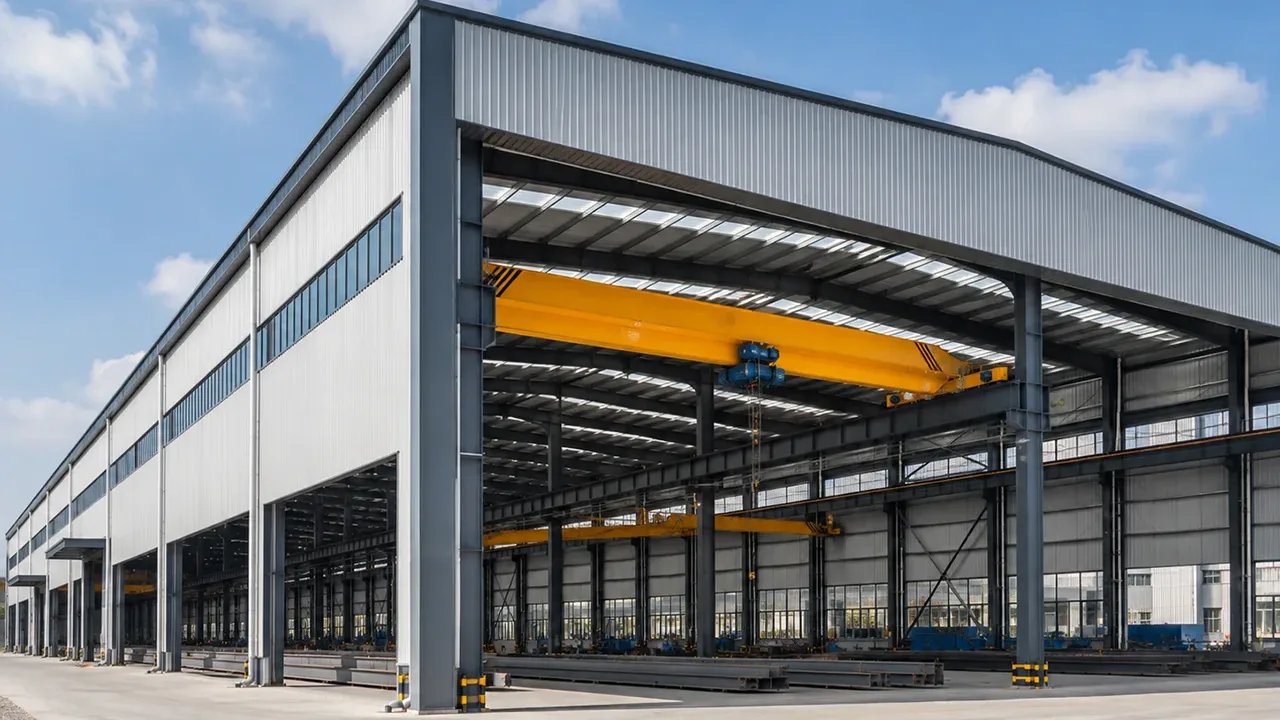
For a service shop we usually build a clear span frame with an insulated envelope, a row of overhead doors on one or both sides, a parts room, restrooms and an office for the front counter. Our commercial metal buildings work covers the shell. Trucking operations add a dispatch office and driver lounge, covered wash bays and secure parts storage. Add-ons like a storage mezzanine or a tire room can be designed in or added later.
Interior finishes are practical. We use liner panels and trim up to a height that survives forklifts, tire carts and pressure washers. Painted slabs and sealed floors are easier to keep clean. An office buildout inside the building gives the service writer or the dispatcher a quiet room without a separate structure.
Fleets in a long, thin state
New Mexico is a driving state. Gallup-McKinley County Public Schools covers 4,857 square miles, the largest school district in the state by area, and keeping that bus fleet fueled and serviced means garages in places where the next shop may be an hour away. Gallup sits on I-40 beside the BNSF mainline, so truck repair and trailer service sit beside rail freight. Further south, Hobbs lists mining and oil and gas extraction among its largest industries, and horizontal wells in Lea and Eddy counties produced 29 percent of Permian Basin crude in the first quarter of 2023.
Oilfield and construction fleets need yards, shops and wash bays near the work, not near a city. If you run trucks around Hobbs or out of Gallup, we plan for rough access roads, hauled water and sites without sewer.
Building around the fleet
Not every fleet building is a shop. Dealers add a showroom or delivery bay, and logistics companies attach covered loading to a terminal. Our truck terminal and cross-dock page explains how a terminal differs from a warehouse, and the same principles apply to a large fleet operation. For an EV-related plant, see automotive and EV plants.
When a fleet grows, the shop has to grow with it. We can extend an existing building with building expansions and additions, matching the frame and wall system, so you add bays without moving the operation. Planning the expansion direction at the start saves a lot of grief later.
Keeping the fleet working during construction
A fleet cannot park for six months. If we are adding to an operating facility, we phase the work so the existing bays keep running, protect the yard and keep truck routes open. New buildings go up beside the old one, then the crew cuts the connection once the new space is ready. Phasing takes planning and it adds some cost, but it keeps the revenue coming in.
New shops depend on utility service and permits more than on steel. Three-phase power, gas and sewer or septic can each take weeks. State licensing classifications also matter: general building work like this falls under a GB-98 license, which requires four years of foreman level experience, at least two of them commercial. We ask for the utility timeline in the first call and tie the schedule to it. Public fleets will also find our approach to municipal and public works projects useful, since procurement rules shape the dates.
Describe your vehicles and your bays
Tell us what you service, how many bays, what doors you need and where the site is. We will respond with a building concept, a price range and a schedule that keeps your trucks working. Owners who also ship parts can look at warehousing and distribution buildings.
Common Questions
How tall should the doors and ceiling be?
Measure the tallest vehicle you expect, including roof equipment and raised beds, then add clearance. A 14 foot door suits most service work, but tall buses and heavy trucks often need 16 feet or more. Interior eave height must allow for lifts when raised. It is cheaper to build tall at the start than to raise a roof later.
What environmental rules apply to a service shop?
Oil, solvents, coolant and wash water all have rules for storage, spill control and disposal. Oil separators, containment and floor drains are common requirements. The rules depend on what you handle and how much. We design the floor and drainage with your engineer and confirm with the permitting authorities before the slab is poured.
Can you keep my shop open while you build?
Often yes. We build the new space beside the old and tie in at the end, or phase an expansion so some bays are always usable. It takes careful planning of utilities, truck routes and crane picks. It may add schedule or cost, and we show you that difference up front.
How do you handle a remote yard without utilities?
We price what is needed to make the site work. That may include a well or hauled water, a septic system, a temporary power setup and a generator during construction. Permanent three-phase power can take longer than the building, so we raise it at the very first meeting.
What does a truck repair building cost compared to a warehouse?
More per square foot, mainly because of the floor, the doors, ventilation, lifts and electrical service. The steel frame itself is similar. A bare shell is cheaper, but shops need the equipment and finishes to function. We give you a shell price and a separate allowance for the vehicle-specific systems.