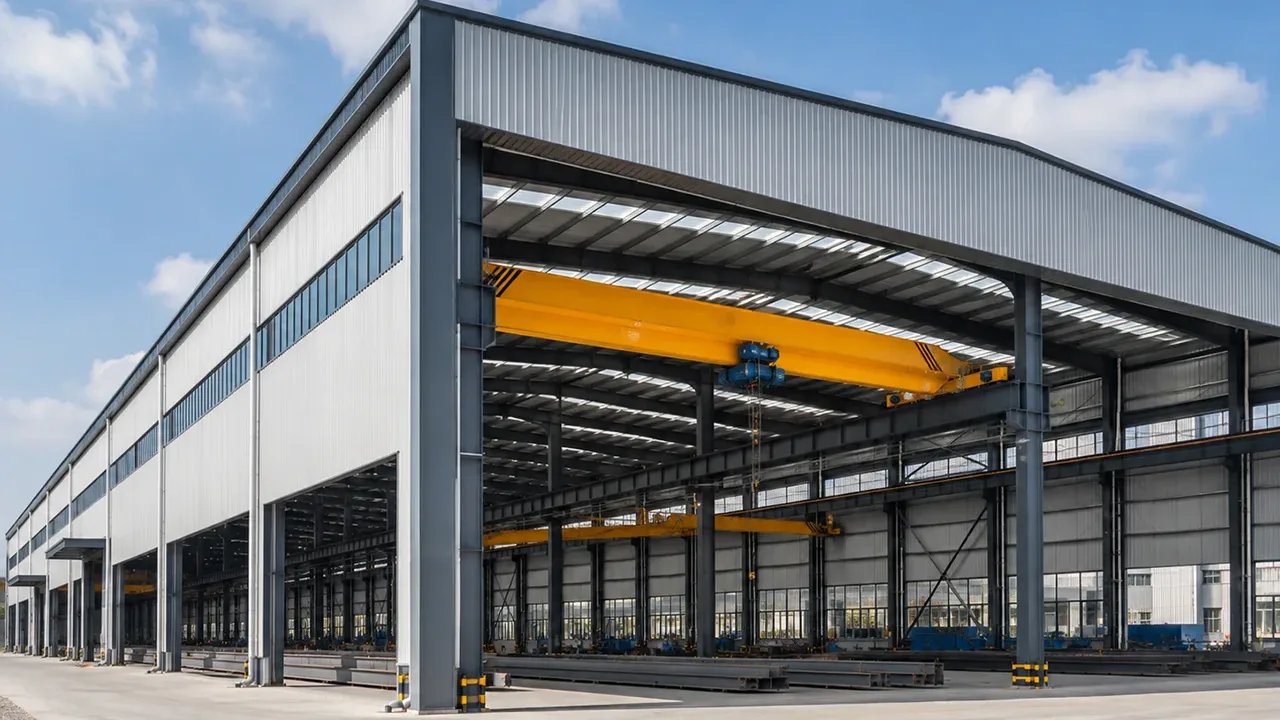
Aircraft Hangar Construction in New Mexico
Roswell Air Center took in more than 300 aircraft for storage in 2020, and its tenants include aircraft repair and refurbishing companies and a university campus. New Mexico's dry air and long runways make it a place to park and fix airplanes, and every airplane needs a roof over it sooner or later. A hangar is a simple idea, one huge door and one huge room, but the door and the room drive every other decision.
We build aircraft hangars as pre-engineered clear-span steel buildings. A box hangar for a single aircraft is the smallest. A corporate hangar for a business jet needs a wide, tall door and a fire system. A maintenance hangar for airliners or cargo aircraft needs very wide frames and often a crane. In each case, we fix the door and the clear height first and engineer the frame to suit.
Airfields in this state are often far from town, and we say what that means for travel, lodging and water on the first call.
Door, frame and floor
The door is the largest cost item and the most visible. Bifold, hydraulic and sliding doors each have different clearance and wind requirements. Our overhead hangar doors page explains them. The frame has to carry the door header without deflecting, which pushes steel weight up as the opening grows.
The floor must take aircraft tugs, jacks and fuel spills. It needs slope to drains, oil separation if maintenance happens inside, and thickened edges at the door track. Utilities include lighting, outlets, compressed air and sometimes heat. Our aircraft hangars service page lists the standard package, and our clear-span buildings page describes how wide frames are made.
Airfields we build for
Roswell Air Center sits five miles south of town on 5,029 acres with a 13,000 foot runway and a 10,008 foot runway, and from 2025 it has hosted the National Championship Air Races. In 2022 it was reported that the Santa Teresa airport would receive new hangars and a cargo-only runway. Santa Fe Regional Airport is city-owned with an 8,366 foot runway and handled 402,000 passengers in 2025. Smaller municipal strips, such as the one at Taos at 7,095 feet, serve general aviation and mountain flying.
Each field has its own sponsor, lease terms and height limits. High elevation at fields like Taos and Santa Fe also means colder winters, so snow load and heated floors come up in the design. Our pages for Roswell, Santa Teresa and Taos describe those markets.
Fire, wind and dust
Hangar fire protection is serious because a fire involving fuel and aluminum spreads fast. Depending on size, use and code, a hangar may need foam, deluge or sprinkler systems with a reliable water supply. Remote fields often lack a hydrant, so a tank and pump house can be a budget line. Raise it at the first meeting.
Wind matters twice. The building has to resist uplift on a wide roof, and the door has to resist wind pressure when closed. Spring gusts can stop door installation. Dust is a nuisance for airplanes and avionics, so we seal door seals and ventilation openings carefully. Aircraft owners tend to appreciate that detail.
Code, airport sponsor and airspace
The building falls under the 2021 New Mexico Commercial Building Code (14.7.2 NMAC), which adopts the 2021 International Building Code as amended and took effect July 14, 2023. The airport sponsor, usually a city or county, controls the lease, site plan, and building height. Structures near a runway may also need airspace review, which can take time.
We prepare drawings for the sponsor, the building department and the fire marshal so the same set answers each. If the field is a public use airport with federal grants, there may be added rules. Many private owners are surprised that the lease and the review, not the building, set the timeline. For corporate flight departments, see our aviation industry page.
Schedule and long drives
A hangar slab is poured early and must cure before steel arrives. Frames, roof and walls follow in a short, busy window, and the door goes last, since the opening must be finished and square. Door manufacturers have lead times that can exceed the steel, so we order doors with the building.
Gate checks, escorted deliveries and restricted hours at some airfields slow trucks. Monsoon storms can end a crane day by midafternoon, and a gust front can strand a lift. We plan for it, and we show crew lodging and water hauling as lines in the proposal.
Hangars that share a building
Not every hangar is only a hangar. A corporate flight department may want a hangar bay, a shop, a parts room and an office under one frame, and a flex light industrial approach with a demising wall can split the space for a tenant later. An aircraft maintenance shop may have more in common with a manufacturing plant, with heavy slabs, compressed air and a crane.
Smaller fields often want a row of individual hangars, called T-hangars or box hangars, under one roof line. They share walls and save steel but need fire separation and drainage between units. We help owners decide whether a row or a single large building makes sense, because the cost per aircraft position changes with the size of the bay and with how many tenants share the door apron.
Bring the aircraft and the airport
Tell us the aircraft, the airfield and your lease terms. We will help you set the door, the clear height and the frame, then price the building with site and travel costs shown separately.
Common Questions
What size hangar do I need?
Start with the aircraft wingspan, tail height and tow clearance, then add room for movement and storage. A good rule is to leave a few feet of clearance on each side of the wing tips. We help you test the layout against the door width.
Which door is best for a hangar?
Bifold hydraulic doors are common for tall openings and tight sites. Sliding doors suit wide openings. Overhead sectional doors work for small hangars. The right door depends on opening size, wind and budget.
Can I store a business jet in a metal hangar?
Yes. Business jet hangars are common and need tall doors, strong floors and fire protection. The aircraft tail height often sets the door height, so check the manual before ordering.
Do I need a fire system?
Often, depending on size, use and construction type. Small private hangars may need less than large maintenance buildings. The fire marshal and the airport sponsor will set the requirement. Raise it early, because it can add a lot to the budget.
Can you build on an airport lease?
Yes. Most hangars are on leased ground. Review the lease for term, reversion of improvements and height limits before you order the building, because the lease determines how long you can recover the cost.