Government and Municipal Buildings in New Mexico
Bidding began on a $4 million runway project at Belen's Alexander Municipal Airport after the FAA approved a new runway, because the airport manager said the existing one cannot be used when the wind blows in from the west. Projects like that pull a string of smaller buildings behind them: an equipment shed, a maintenance shop, a hangar for the city or county, and a fuel and ground-support building. Most municipal construction in New Mexico looks like this. It is not a city hall. It is the steel building that keeps a town's fleet, salt, water and records out of the weather.
We build for cities, counties, tribal and special districts, and for the agencies and contractors that work for them. That means fire stations and ambulance bays, public works yards, vehicle maintenance shops, sand and salt storage, transfer station buildings, water and wastewater support buildings, senior and community centers, airport buildings and animal shelters. A metal building suits public budgets because the price per square foot is clear and the schedule is short.
Public work has its own rules. Bids, bonds, insurance, wage rates, open meetings and funding that arrives in fiscal-year chunks all shape how we plan, and we plan for them rather than discover them. We are plain about what we can and cannot do inside the solicitation.
Who we work for in the public sector
The core customers are in municipal public works: street, water, sewer, parks and fleet departments with a yard and a shed. A county road crew has different needs from a town utility department, and both differ from an airport authority. We start by asking which vehicles, equipment and people will be inside.
A fire station needs apparatus bays with wide, tall doors, a floor that handles hose and wash water and living quarters that meet a different set of code requirements. A public works shop needs a lift, a crane and a wash bay. An animal shelter needs ventilation and washdown. We tailor the frame to the use and pull in specialists for what falls outside ours.
What public owners are building
Public investment in New Mexico follows federal bases, airports and rail corridors as much as city halls. In Clovis, a November 2025 report said Cannon Air Force Base would receive over $80 million secured by Senator Martin Heinrich, including an $80 million 192-bed dormitory and over $8 million for a security forces training facility, with no date announced for the upgrades. Money like that shows up as base-support buildings, nearby community projects and contractors who need space.
Santa Fe Regional Airport completed a terminal expansion and new parking lots between 2022 and 2024, and Belen has an FAA-approved new runway. Airports bring hangars, maintenance shops and ground-support equipment buildings to the same site. Up north, Raton sits just south of Raton Pass, where I-25 can close during heavy winter snow, so road crews there need sand and equipment buildings close to the pass.
Code and procurement
New Mexico public buildings follow the 2021 New Mexico Commercial Building Code, which adopts the 2021 International Building Code as amended and took effect July 14, 2023, and the 2021 New Mexico Commercial Energy Conservation Code, effective January 30, 2024. State licensing under the GB-98 General Building classification covers erecting commercial buildings, and public owners check the classification against the bid scope.
Procurement varies by owner. A small town may buy a building through a quote and a purchase order, a county may use sealed bids and a state-funded project may follow design-build rules. We provide a price book, a drawing set and an engineered frame, and we work with the owner's procurement officer to deliver what their rules require. For smaller jobs, a design-build approach shortens the path.
Funding years and weather windows
Public money arrives in fiscal years, and projects must start and finish inside them. A capital grant expires on a date. A legislative appropriation has a reversion deadline. We ask for the funding source and its deadlines at the first call and plan backward from them, ordering the frame early so fabrication does not become the schedule risk.
Weather and distance drive the field schedule. In snow country, we pour footings and set steel before the first hard freeze when we can, and we protect concrete when we cannot. On remote sites, we plan delivery, crew lodging and the nearest source of water in advance. We would rather tell you the road to a site adds a week than hide it in a change order.
Plain buildings that last
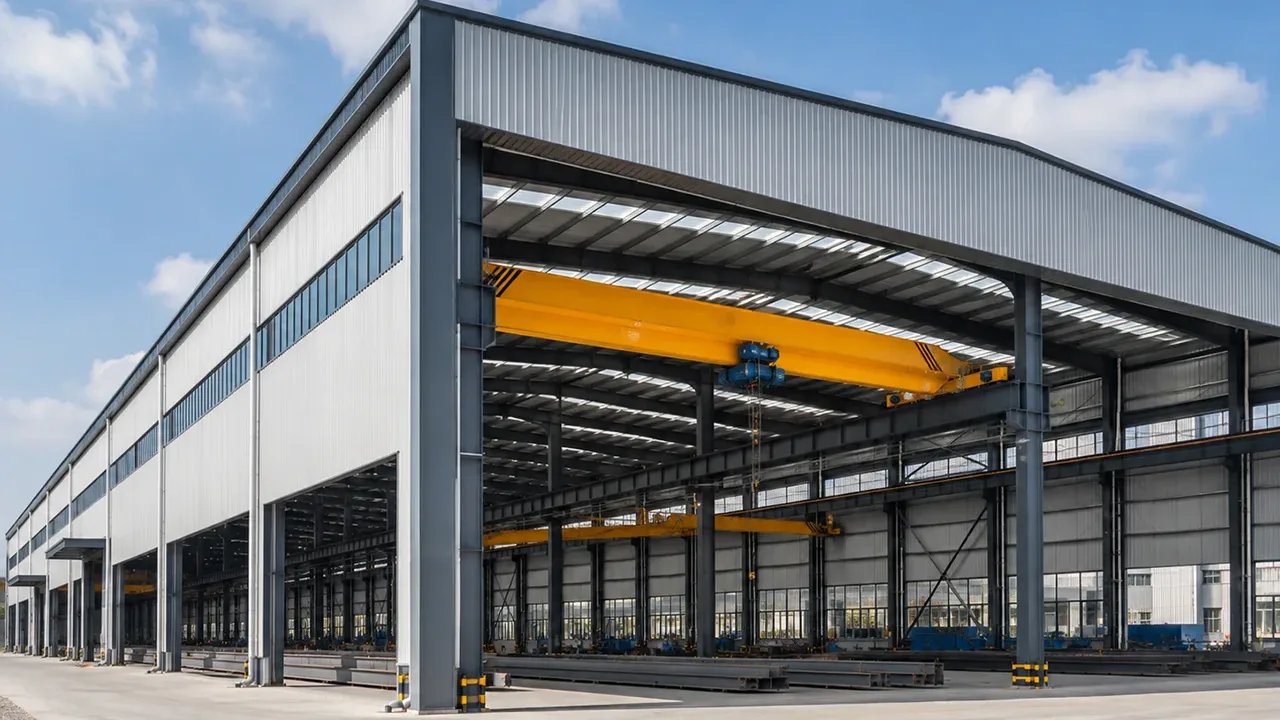
Public buildings are used hard and kept for a long time, so we choose durable parts. A rigid frame with heavy-gauge girts, a standing-seam or heavy through-fastened roof and a thick slab handles trucks, loaders and years of washdowns. Doors matter most. Overhead doors in a fire station or a fleet shop open thousands of times, so we specify openers, springs and hardware for the cycle count.
We also look at what the owner will do in ten years. A truck terminal or cross-dock layout for a county fleet can later become a regional equipment hub, and a plain warehouse shell can switch from records storage to emergency supplies. We leave room for a bay, a mezzanine or a new door.
Plan your public building
Send us the use, the funding source and the deadline. We will return a frame and shell price, a schedule that fits your fiscal year and a short note on the procurement path.
Common Questions
Can we buy a metal building without a full design-bid-build process?
Sometimes. It depends on the owner's procurement rules and the dollar threshold. Many small projects go through quotes or a cooperative purchase, while larger ones need sealed bids. We can supply a price and a drawing set early so the procurement officer knows what they are buying.
How do you plan for a fire station?
Start with the apparatus: its length, width and height set the bay doors and the clear height. Then the floor, which needs slope to a drain, a trench for exhaust capture and a finish that handles wash water. Living quarters follow a different code path, so the design team leads that part and we frame to their drawings.
Can you store salt and sand in a metal building?
Yes, with corrosion in mind. Salt is hard on steel, so we specify coatings, concrete push walls and a roof geometry that keeps spillage out of the frame. Wheel loaders also need clear height and turning room. We design the bin walls for the actual loads.
What if our funding is a grant with a deadline?
Tell us the dates on day one. We back-schedule from the expiration, order the frame early and build a recovery plan for weather. If the funding source has its own forms or reports, we help you collect the documentation.
Do prevailing wage rules apply?
They can, depending on the funding source. We price the job to the wage determination in the bid documents and keep certified payroll when required, and we handle that paperwork as part of the job.