Warehouse Metal Shells Near New Mexico Rail and Border Hubs
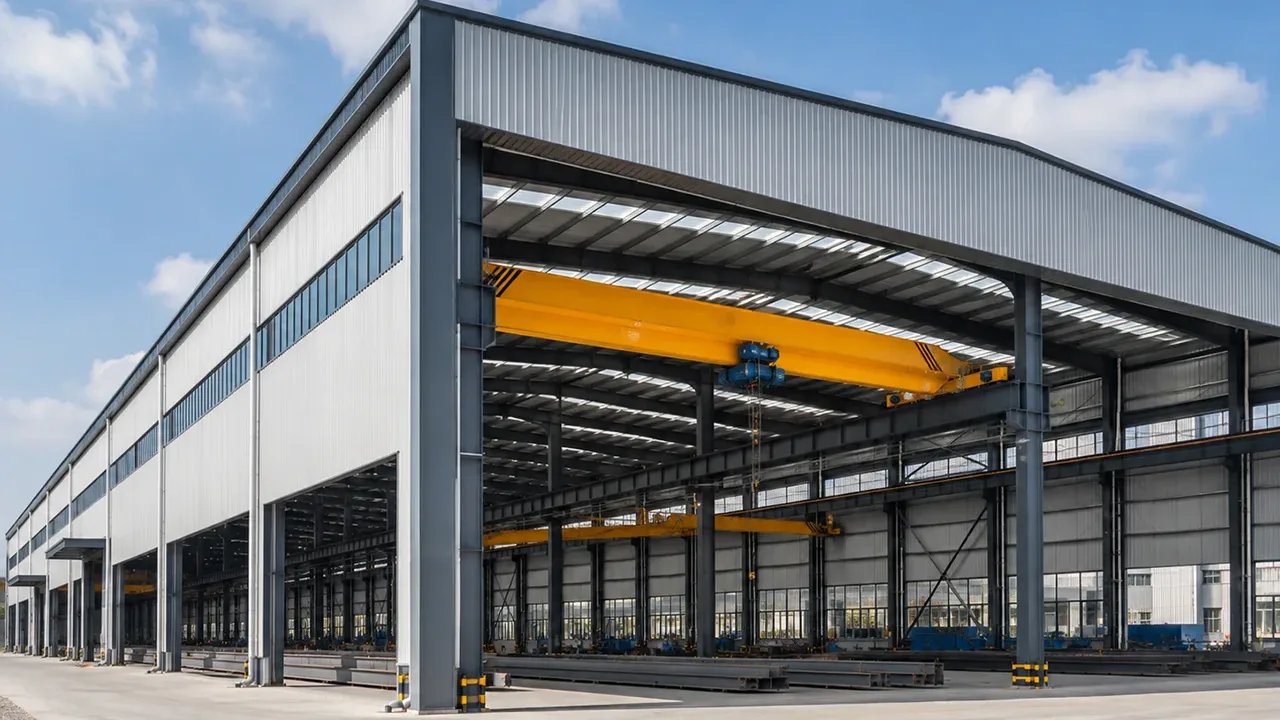
More than 100 mostly intermodal freight trains arrive and leave Clovis every day, where BNSF runs a division point and a large classification yard. Freight like that has to land somewhere. Across New Mexico, the answer is a metal-framed warehouse shell: a clear-span envelope with a slab, roof, walls and dock openings, ready for the tenant's racks, lighting and conveyors.
We build warehouse shells for owners, developers and tenants who want to control cost and speed. A shell is the structure and the weathertight envelope. It leaves out the interior fit-out until a tenant is known, and that lets an owner start earning or leasing earlier. If the tenant is already chosen, we continue straight into dock equipment, offices and mechanical systems. A shell is where small mistakes cost the most, because a tenant who finds the clear height two feet short will not take the space.
New Mexico's rail and highway hubs are spread out. Some of the best sites are an hour or more from the nearest city, and some have no water on the lot. We say so in the quote. The fine print, such as slab joints, door counts, truck turning and fire water, can matter more than the steel tonnage. Our pre-engineered metal buildings page gives the structural background.
Rail yards and ports of entry drive the demand
Industrial land with rail is the draw. The Clovis Industrial Park is described by Clovis Economic Development as a shovel-ready, certified site with on-site BNSF railway and Xcel Energy, and its industrial parks have 230 acres available. Belen's rail yard is a major BNSF division point on the Southern Transcon, and Rio Grande Industrial Park is a marketed site of about 365 acres near Belen, zoned for business manufacturing and heavy industrial uses. Both sites show how rail access and zoned land shape where shells get built.
The southern border is the largest build-out. The Union Pacific Santa Teresa intermodal terminal is listed with 74,000 feet of trackage expandable to 145,000 and intermodal lift capacity of 225,000 units expandable to 700,000. In 2022, private builders were constructing speculative warehouses of 365,000 and 135,000 square feet there. Our Santa Teresa and warehousing and distribution pages describe how those markets work.
What a shell contains, and what it leaves out
A warehouse shell includes site grading, the foundation, a floor slab with jointing, the rigid frames, roof and wall panels, trim, gutters, personnel doors and the dock and drive-in door frames. We can add insulated roofs, skylights or high-volume fans, and we can rough in electrical and fire-protection stubs. It leaves out racking, conveyors, interior walls and tenant-specific systems.
The slab is a major piece. Joint spacing, thickness, subgrade preparation and flatness decide how well forklifts and racking perform. We pour to the specification, test for flatness when it is required, and cure it properly. Where trucks back up to docks, we pour dock aprons with the correct slope and reinforcement. For buildings that need heavier loads or cranes, our high-bay crane-ready buildings page explains the added structure.
Fast-track shells and how to keep them honest
Owners often ask for the quickest route to dry-in. The route is simple: get the geotechnical report, order the steel package as soon as the design is frozen, and pour while the steel is in fabrication. We overlap trades so the roof is on before the slab gets rain. Long-lead items such as dock levelers, large doors and sprinkler risers get ordered early.
A fast schedule is only honest if the site is ready. On a remote site, power and water may arrive after the building does. Concrete from a distant plant takes more trucks and planning. In a monsoon season, plan for lost afternoons. We build those delays into the schedule, so you can tell lenders and tenants a date that holds. If you prefer to see the real timeline early, we will lay it out with you at the start.
Dock safety, fire water and truck traffic
A warehouse has more moving machinery than most buildings, so layout is a safety decision. We separate pedestrian and truck paths, make sure dock doors have clear lines of sight, and place bollards at corners and doors. Truck courts need enough room for turning and queuing, and drainage that keeps water off the dock approach. The fire marshal reviews fire lane and hydrant layouts, and we draw to those requirements.
Fire protection often controls the cost. A large storage building with high-piled storage may need an engineered sprinkler system, an adequate water supply and sometimes a fire pump and tank. On remote lots with no municipal main, that means a tank and a pump house. We raise that in the first conversation so it is not a surprise at plan review. The building falls under the 2021 New Mexico Commercial Building Code (14.7.2 NMAC), effective July 14, 2023, and the energy code in 14.7.9 NMAC.
Pieces that connect to the shell
Shells often grow. The building expansions and additions work covers adding bays to a shell that is already in service. If a tenant needs a mezzanine for light assembly or offices, see mezzanines and platforms. For cold goods, our cold storage facility page explains the insulated panels, vapor control and refrigeration loads that change a shell.
If your shell is part of a larger logistics campus, the distribution center page covers truck courts, trailer parking and dock counts. Whatever the plan, tell us the clear height, the column spacing you need for racking, the dock count and the site address, and we will propose a frame and a price.
Give us the clear height and the dock count
Send the site, the clear height, column spacing and dock count. We will propose a frame, show the slab and fire-water assumptions, and price the shell with site costs separated.
Common Questions
What clear height should a warehouse shell have?
It depends on the racking and the product. Taller buildings store more per acre but cost more in steel, walls and fire protection. Ask your likely tenants what they need, because a shell with too little clear height can sit empty. We price two or three heights so the tradeoff is clear.
Can the shell be built before I have a tenant?
Yes. That is the point of a shell. We design it so common tenants can use it, with adequate clear height, dock positions and power, and we leave the interior to be built to suit. A shell with flexible dock layouts is easier to lease.
How do I handle fire water on a rural lot?
Fire protection depends on the use, the building size and the fire official. If no municipal main is nearby, you may need a water tank and pump. We ask early and price the system as a separate item so you can see the effect on the project.
Is a tilt-up better than a metal shell?
Each has a place. Metal shells go up fast and cost less on many sites, especially away from big ready-mix plants. Tilt-up can suit very large buildings and some tenants. We compare the two for you if the project is near the border of the size where either works.
What does remote delivery add to the price?
Crew travel, lodging, fuel, concrete haul, and sometimes a temporary water supply. These costs vary by site, so we itemize them. On some sites they are a small share. On others, they matter a great deal.