Pre-Engineered Metal Buildings for New Mexico Sites
Snow loads on a Raton roof are not the same as snow loads in Tucumcari or Las Cruces, and a pre-engineered building is only cheap if the engineer designs it for the right place. Raton sits at 6,559 feet and averages 28.8 inches of snowfall a year. Tucumcari saw a record high of 111 degrees on June 11, 2022. New Mexico asks a lot of a steel building: snow, hail, high-desert wind, monsoon downpours and summer sun, sometimes in the same county.
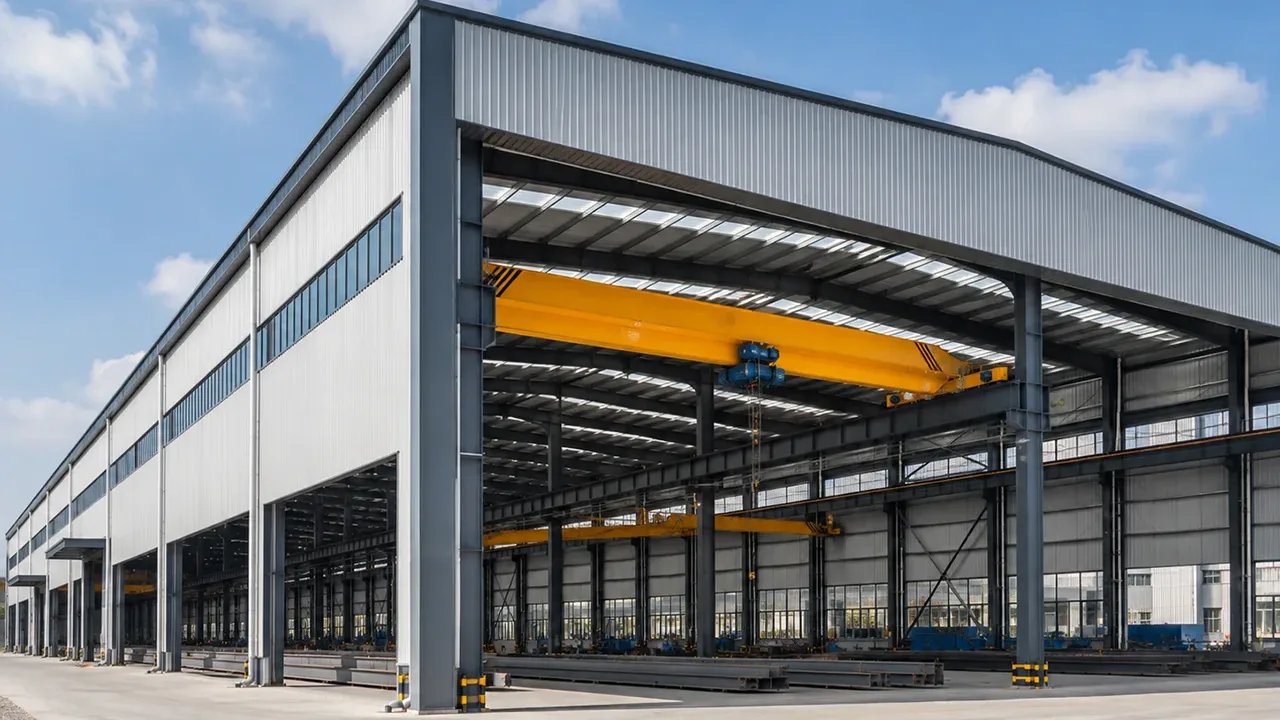
A pre-engineered metal building is a kit of engineered steel members, panels and trim designed to the owner's site and loads, made in a factory and bolted together on your foundation. The system suits shops, warehouses, barns, hangars, storage, churches, gyms and many commercial uses. It works because the engineering is repeated and the fabrication is done indoors, so most of the cost sits in steel weight and not in field labor.
We erect them, but we also help you choose the right one. Most of the money on a metal building is decided before an order is placed, by span, height, loads and the site.
What the engineer designs to
The structure falls under the 2021 New Mexico Commercial Building Code (14.7.2 NMAC), which adopts the 2021 International Building Code as amended and took effect July 14, 2023. Snow, wind, seismic and collateral loads come from the site and the use, and the building manufacturer's engineer sizes the frames to those loads. Your local building department may add its own requirements for snow or wind.
Energy is part of the permit too. The 2021 New Mexico Commercial Energy Conservation Code (14.7.9 NMAC) took effect January 30, 2024 and sets insulation and air leakage requirements for conditioned buildings. A building that is never heated, such as a machinery shed, can often skip a lot of it. Tell us how the building will be used and we will tell you which rules apply.
Weather and wind by region
Clovis reports about 18.5 inches of rain and 10 inches of snow a year at 4,266 feet. That is a very different design than Raton and the Raton Pass area, where snow can close I-25 now and then. High wind runs through the eastern plains, the Estancia Valley and many mesa tops, and wind uplift on a roof often drives the design more than snow does.
Monsoon rain arrives in July through September in short, heavy bursts. Roof slope, gutters, downspouts and drainage to the site matter more than they look on paper. We see roofs that are fine in a dry year and overwhelmed in a wet one, and we size drainage to the worst storm rather than the average.
Who does what on site
Our trade partners pour or coordinate foundations, set anchor bolts, raise frames, hang girts and purlins, and install panels and trim. We hold the schedule and the survey. For a first-time owner, one crew from slab to trim is easier than three, because no one else can blame the previous trade for a misfit.
Licensing is worth a look. The GB-98 General Building classification under 14.6.6 NMAC covers erecting commercial buildings and requires four years of foreman level experience, at least two of them commercial. Ask any bidder which classification they hold and which work it covers. Our rigid frame erection page explains the sequence in more detail.
What drives a metal building price
The big levers are width, length, eave height, roof slope and the loads. A wider building costs more per square foot because the frames carry more. A taller eave costs more because columns get heavier. Large doors cost more because the frame must be stiffened around them. Insulation, trim and accessories often add more than owners expect.
The site comes next. Grading, foundations, utilities and access can match the steel in cost. On a remote parcel, mobilization and water hauling matter as well. Our pre-engineered metal buildings page shows the typical package, and our standing seam metal roofing page explains the upgrade many owners choose for a longer-lasting roof.
Safe erection
Erecting steel is work at height. Crews use fall protection, controlled access zones, temporary bracing and a planned lift sequence. Frames are not left standing without braces, and panels are not installed in high wind. We stop work when gusts rise because a swinging panel is a hazard, and a delayed day is better than an injury.
Owners can help by clearing the site of overhead lines, marking utilities and providing a firm crane pad. We walk the site before mobilizing and tell you what needs to change. Safe sites are also faster sites.
What gets built with this system
Ranches and dairies order equipment sheds, hay barns and shop buildings, and our agriculture and agribusiness work is mostly steel. Towns and counties order maintenance yards, fire stations and storage for road crews, which fall under municipal public works. Contractors and small manufacturers order shops. Owners who want the lowest cost per square foot for a plain warehouse or a row of self-storage units often choose the same system.
Metal is not right for everything. A project that needs a masonry or concrete face, or one that is a high-rise, belongs to another system. If you are weighing it against concrete walls, our page on tilt-wall buildings compares the two honestly.
Start from the use
Tell us what the building will do, how big it needs to be and where it will sit. We will recommend a size and system, then give you a price that shows the site separately.
Common Questions
How long does a pre-engineered building take to arrive?
Fabrication and shipping take weeks from a released order, and the time depends on the manufacturer and the size. Foundations are built during that time. We order as soon as the loads and sizes are final and the permit is moving.
What is the cheapest way to get a metal building?
Keep the shape simple, the span moderate, the eave height reasonable and the doors few. Use the building manufacturer's standard sizes. Avoid special trim and heavy architectural requirements unless the code or your lender requires them.
Can a metal building be insulated for a New Mexico summer?
Yes. Roof and wall insulation, reflective roof colors and ventilation reduce heat. Conditioned spaces need insulation that meets the energy code. We price a few options so you can see the payback.
Do I need a permit for a barn or a shed?
It depends on use and the local rules. Agricultural buildings may be treated differently from commercial ones, and many rural parcels have fewer local reviews. Ask your county building office and your insurer before you order.
What if my parcel has no water?
Water is needed for concrete and often for dust control. We can haul it, and we show the cost in the bid. If a well is planned, drilling it first can save money later.